
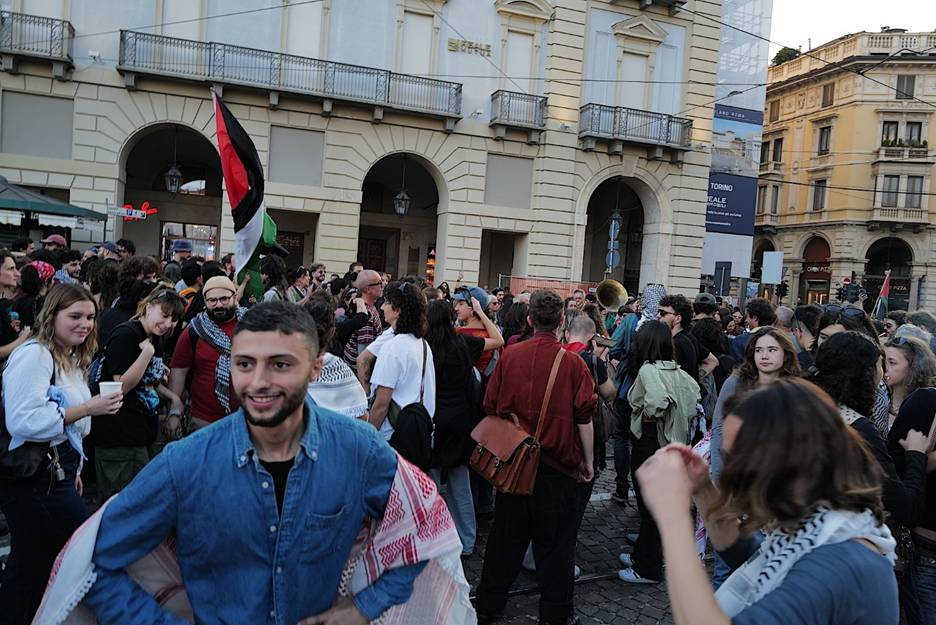
Having recently graduated from the University of Turin, Campus Luigi Einaudi with degrees in global law and economics, Abu Saif reflected on the value of education
How a Novel Opened an Unexpected Path to Education
Report and photos by Phil Pasquini
Paris: After growing up in Gaza’s largest refugee camp Jabalia, and having never known peace, author and university journalism and mass communication student, Naim Abu Saif’s ticket out of the war zone occurred in a twist of fate after his novel, Gaza’s Last Breath was published in 2025.
Interviewing this young scholar, I was most impressed by his overwhelmingly horrific life experiences and his ability to utilize the most oppressive circumstances to his advantage in retelling his firsthand account of what Gazans face daily.
Enduring unimaginable hardships and depravations in growing up with “…wars, explosions, and bombs between Israel and Gaza” Abu Saif related how he felt the urge to document his experiences when “faced with the reality of potential death and the loss of friends, neighbors, and relatives. I wanted to write my story so I would not simply become a statistic. It’s like the last thing I can do because I knew that I would be killed.” He said this because of the extreme difficulty of surviving amidst snipers, missiles, drones, tanks, and automated targeting systems, as well as the execution of civilians during hospital sieges.
Taking inspiration from literature he had grown up with reading Victor Hugo, Mahmoud Darwish, and Ghassan Kanafani along with his work at the Palestinian Journalists Syndicate, Gaza’s Last Breath describes daily life that is reflective of a common thread for many Gazans who trace their roots back to the 1948 Nakba (catastrophe) when families were forcibly uprooted and removed from their ancestral homes and land in Palestine. And it was through his personal experiences and those of his family that he began writing the novel, saying that in Gaza “Every house carries a memory. But each house has dreams.”
Writing in Arabic during what he describes as “living under severe bombardment, displacement, and siege with no internet, running water, or food supplies,” the novel conveys life in Gaza by telling the story of a woman named Yasmina originally from Jaffa, who like his own mother is a single parent raising five children after her husband was killed. The book tells the story of the broader lives of the Gazan population, including that of Palestinian Christians and is partially autobiographical, rendering his firsthand experiences of daily life, in depicting a university student whose studies are abruptly interrupted by the outbreak of war in October of 2023.
In the final semester of his university studies Abu Saif’ related that “My friends and I were planning our graduation for September 2024. On Thursday, October 5, 2023, my professor assigned our thesis titles. Everything seemed fine, and I went to the sea with my friends to discuss our plans. On the morning of October 7, 2023, we woke up to the sound of missiles. The land shook like an earthquake, and the sky looked furious. We realized something catastrophic was happening.”
Once completed in Arabic, with the help of his British Cypriot friend Tim, an Oxford graduate, the novel was translated into English for the first edition. Due to “significant solidarity and interest in Italy for a novel written entirely inside Gaza detailing daily life,” an Italian publishing house reached out regarding the book and published an Italian edition Rispro di Gaza. Following the book's international release, universities and cultural organizations recognized his work and along with his publisher in 2025 facilitated his arrival on academic and humanitarian grounds. The Italian Parliament agreed to create a “humanitarian corridor” ultimately offering evacuation and scholarships for 50 Gazan students to study at Italian universities.
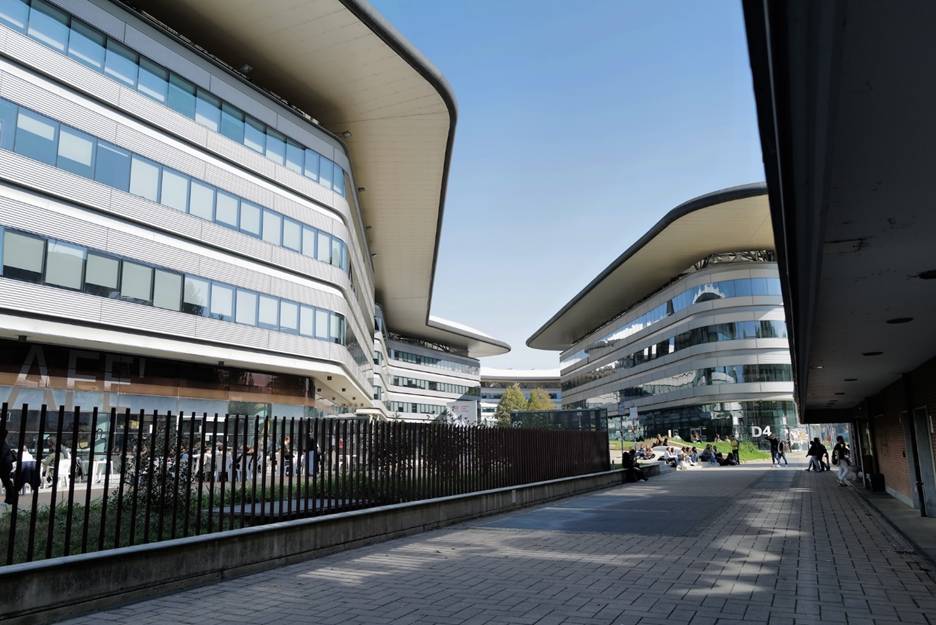
Having recently graduated from the University of Turin, Campus Luigi Einaudi with degrees in global law and economics, Abu Saif reflected on the value of education saying that “because they want to destroy our future, the most important investment for the future is education.”
Regarding media coverage on the Gaza genocide, he told this reporter: “I’m really disappointed in the media. I don’t want to name this media, but I remember that when I was in Gaza, there was starvation. People were murdered by starvation, and some media said that what was happening in Gaza was a technical problem. No one had the courage to say it was a policy to starve people until death.”
“I went to the hospital. I said to the doctor, ‘I’m starving. I’m dying. I need medicine. I need food.’ He looked and he blushed at me. ‘We have nothing to do for you.’ Believe me, I was destroyed inside.”
(Phil Pasquini is a freelance journalist and photographer. His reports and photographs appear in the Washington Report on Middle East Affairs, Countercurrents, LAProgressive and Nuze.ink. He is the author of Domes, Arches and Minarets: A History of Islamic-Inspired Buildings in America.)
