Middle East Eye
The Islamic Contributions to Medicine - Part III: Superstar Ibn Rushd
By Abdul-Majeed Azad
Technologist (formerly at NASA-Jet Propulsion Laboratory)
Pasadena, CA

The spread of Islam beyond the Arab peninsula witnessed steady expansion of the Islamic Caliphate which was eager to educate its subjects. The Caliphs were great patrons of science and culture. They fully understood the real meaning of the famous saying of Prophet Mohammad (peace be upon him) that in search of knowledge, one should go to lands as far as China! This sentiment led to the rise of prominent Muslim scholars – well-versed in religion and physical and natural sciences alike. They played an immense role in the advancement of various sciences, medicine and medical research in the 9 th to 12 th CE.
Long-lasting momentous strides and great advancements were made during this era of Islamic expansion. This was the basis of Western awakening (famously known as European Renaissance), in areas of physical and natural sciences in which Muslims had left indelible footprints several centuries earlier.
Personalities such as Ibn Rushd, Al-Razi, Ibn Sina and Ibn Al-Nafis, were some of the true stalwarts of discoveries of illnesses and their treatments in their times. Thanks to their invaluable contributions, modern medical field benefited and progressed in the Western world that is witnessed today.
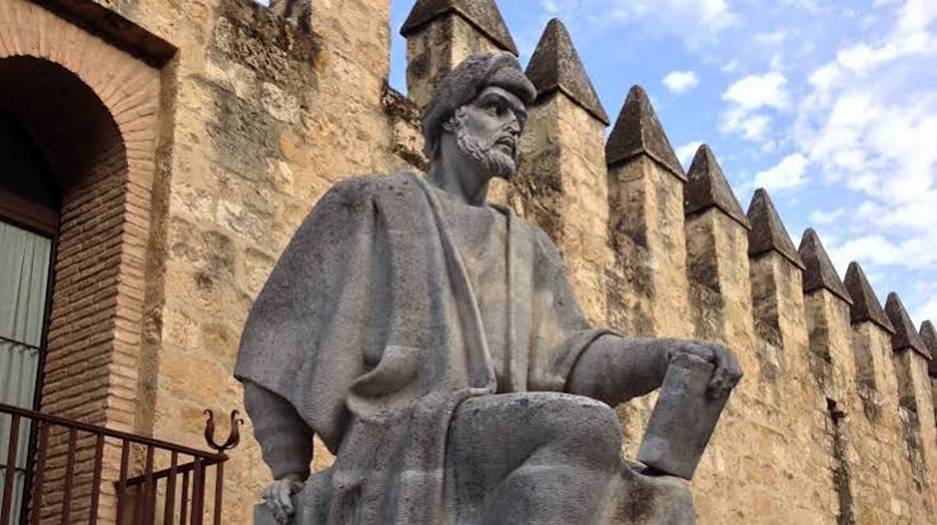
Ibn Rushd: Abu l Walid Muhammad bin Ahmad bin Rushd (famous as Ibn Rushd, Latinized Averröes) was born April 14, 1126, CE, in Cordoba, Spain and died December 10, 1198 CE, in Marrakesh, Morocco. Although much is known about Ibn Rushd’s adult life, details of his early upbringing are rather obscure. His grandfather was a prominent jurist at the Maliki school of Law in Spain. In his adult life, Ibn Rushd too was appointed to this position as qadi (chief justice). These appointments were of great importance as in those days, a qadi’s responsibilities were three-fold: (i) He was the religious authority, (ii) representative of the ruler and, (iii) upholder of the civic order. Ibn Rushd held that position in two cities, which signifies the amount of trust and respect he commanded. After his stint as qadi, he moved onto other fields. During his lifetime, he wrote on many subjects, mostly dealing with philosophy. He wrote a great deal on Aristotle, specifically on his treatise on Metaphysics. He also wrote commentaries on Plato’s Republic which became a well-known masterpiece. However, much of his philosophical work had little impact on the eastern world. Because of his assertion that scientific research could teach a great deal to people than divine revelations, much of the Islamic world momentarily rejected his philosophical viewpoints.
Similar notions were proposed by Socrates, Aristotle and Plato, but vehemently opposed and fiercely rejected by the Catholic Church, which deemed them too radical and anti-Christianity. Contrary to the common misconception about him, Ibn Rushd was a firm believer in God . In fact, he viewed faith and rigorous philosophical reasonings as two very compatible and complementary paths in perfect harmony, leading to the same ultimate truth manifested in the physical world. He argued the existence of God using rational and teleological evidence, identifying God as the eternal Designer and Mover who had created and ordered the universe for the welfare of humanity.
Ibn Rushd’s fame mostly lies in his seminal work, Al-Kulliyat (Book of Generalities in Medicine). It is divided into seven books: anatomy, health, disease, symptoms, food, medicines and preservation of health. Al-Kulliyat was written at the request of the Sultan Almohad Abu Yaqub Yusuf (reign 1163-1184). It is viewed as one of the most extraordinary works that immortalized Ibn Rushd as one of the greatest physicians of his time in the Islamic world. It was later translated into Latin, entitled Colliget, and used as a major medical textbook in Europe for centuries. It provided guidance on matters of general medical topics and placed great emphasis on keeping the body well. He wrote detailed accounts on how to eat properly and exercise. He advised eating balanced diets consisting of bread, poultry, fish and mutton. He also recommended frequent exercise after meal followed by a bath. He discussed and described various regions of the body and how different body parts function. He also discussed how body parts and internal organs are affected by illnesses and how to treat them. Isn’t this the very norm prescribed by authentic dieticians, physicians, as well as the self-described so-called ‘healthcare specialist’ influencers on YouTube these days?
He believed that persistent headaches resulting in migraines could cause disorder in the eye. Redness of face and eyes, in addition to swelling and aversion to light, could mean the likelihood of swelling in the brain. He also surmised that nightmares sometime lead to epilepsy and repeated bouts of pneumonia could lead to tuberculosis. He related obesity to bleeding, heart attack or even instant death in some cases – a symptom very well recognized today worldwide. He held the view that redness of face and loss of voice with shortness of breath could be a sign of leprosy. In addition to physical descriptions, he referred to psychological symptoms affecting the brain. He included discussions on imagination, hallucination, reflection and their effect on memory in Al-Kulliyat.