
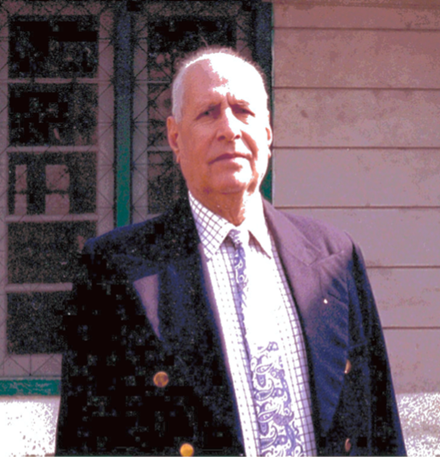
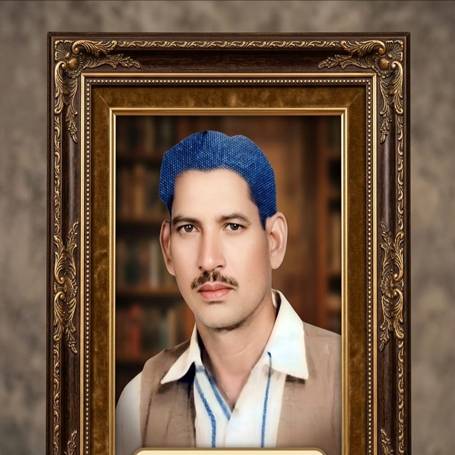
Lt Colonel Aziz Ahmad Siddique Khan Sahib
Siddique Sahib’s Smile: A Story of Generosity, Grace, and Decades of Affection
By C. Naseer Ahmad
Washington, DC

Growing up in Punjab, one frequently encounters the timeless folk idiom “Ishq na puchay zaat”—true love knows no caste, creed, or status. The Punjabi sage Mian Muhammad Bakhsh, in his revered epic Saif-ul-Malook, captured this spiritual truth when he chided someone captivated purely by outward form:
Changee surat tey ashiq huna ay kaadi ay danaaiee
Aashiq ban tuu uss sohanay da jiss ay shakal banaiee
(What wisdom is there in falling for mere outward grace? True devotion belongs to the Maker behind the face.)
For Mian Sahib, affection was never meant to be a vanity tied to superficial trappings. Instead, it was an abiding, quiet recognition of shared humanity. Looking back across six decades, I have come to realize how deeply that sentiment governed the unwritten codes of a Pakistan that has changed profoundly since.
Our family roots trace back to Kharian, then a modest farming settlement along the historic Grand Trunk Road. Before the military cantonment arrived in the late 1950s—and long before remittances from Europe transformed it into the prosperous city it is today—Kharian ran on a subsistence economy where survival depended on mutual dependence. As an army family, my mother, sisters, and I lived across various cantonments where my late father served. When he took early retirement in 1962, we returned to our ancestral home in Kharian for a year and a half. That stay reinforced an ethos that wealth could never dilute: people matter most.
By 1964, my father’s honesty, hard work, and good fortune led him to a major executive position representing an international infrastructure enterprise in Lahore. Suddenly, we transitioned from humble military quarters to a sprawling, wood-paneled compound in Gulberg, the city's most affluent enclave.
It was the mid-1960s—an era of understated warmth and ease. Society carried a relaxed, cosmopolitan balance. Across our wide courtyard, life unfolded without rigid divides. At the edge of the property was a private room, atop servant quarters, where the original landlord, an accomplished engineer, would arrive quietly a couple of times a year with his wife to sit in contemplation with their spiritual mentor – their ‘peer’. Nobody pried; everyone coexisted with mutual courtesy.
Though we inhabited one of Lahore’s wealthiest postal codes, the village never left our household. Extended relatives, grandparents, and cousins arrived and stayed for months. My father – late Lt Colonel Aziz Ahmad - treated the compound’s staff not as subordinates, but as partners in our daily life. When we bought our very first television set, our living room doors were thrown wide open. The staff and their children joined us on the rugs, our eyes collectively glued to the glowing black-and-white screen.
Central to our lives was Siddique Khan Sahib, a gentle, mild-mannered man who served as the resident cook. He cooked for visiting dignitaries, prepared grand company banquets where classical musicians performed into the night, and once casually recalled how he had cooked for Quaid-i-Azam Muhammad Ali Jinnah. Yet, his demeanor never possessed an ounce of pride. When we had large family events, Siddique Sahib cooked such delicious meals that are still fresh in my mind today. Siddique Sahib’s children grew up alongside us, playing on the compound’s grounds.
Decades moved fast. The relaxed, neighborly cadence of the 1960s gradually yielded to the social shifts of the 1980s and beyond, as society turned distinctly more guarded, socially stratified, and reserved. Homes grew taller walls, security gates multiplied, and the easy mingling across socio-economic lines began to disappear. I left to pursue engineering studies at George Washington University, built my career, and started a family. Whenever I returned to Lahore, visiting Siddique Sahib was essential. His radiant, effortless smile stayed etched in my mind long after he and my father passed away.
Years later, my father—then serving as Chairman of the storied Punjab Club—helped Siddique Sahib’s eldest son, Umar Hayat, secure an honorable job there. Yet with the inevitable rush of life, families scatter, and eventually, the thread seemed lost.
Then, out of nowhere, my elder sister, Apa Mateen, informed me that Zubair Khan—Siddique Sahib’s youngest son—had reached out. Decades had elapsed, yet the warmth had not aged a day.
For over a year now, Zubair exchanges daily messages on WhatsApp with me and my beloved sister. Every morning, his kind greetings arrive on my phone, carrying the unconditional affection of a younger brother. In his messages, he fondly retraced the arc of our intertwined lives: remembering the childhood games of 1966, watching television through our residence window, and mourning the turns of life that took away beloved elders and his late wife, who passed when their daughter was only two. Today, he proudly watches that daughter grow, while working with quiet dignity as a consultant in textiles.
Reading his heartfelt recollections, I was reminded that changing cultural norms and expanding economic divides cannot extinguish genuine human regard. The world around us may grow increasingly segmented, guarded, and distant. Yet when human connections are planted in the simple, sincere soil of mutual respect, they do not wither with time, nor do they ask about status or station. They simply endure.
