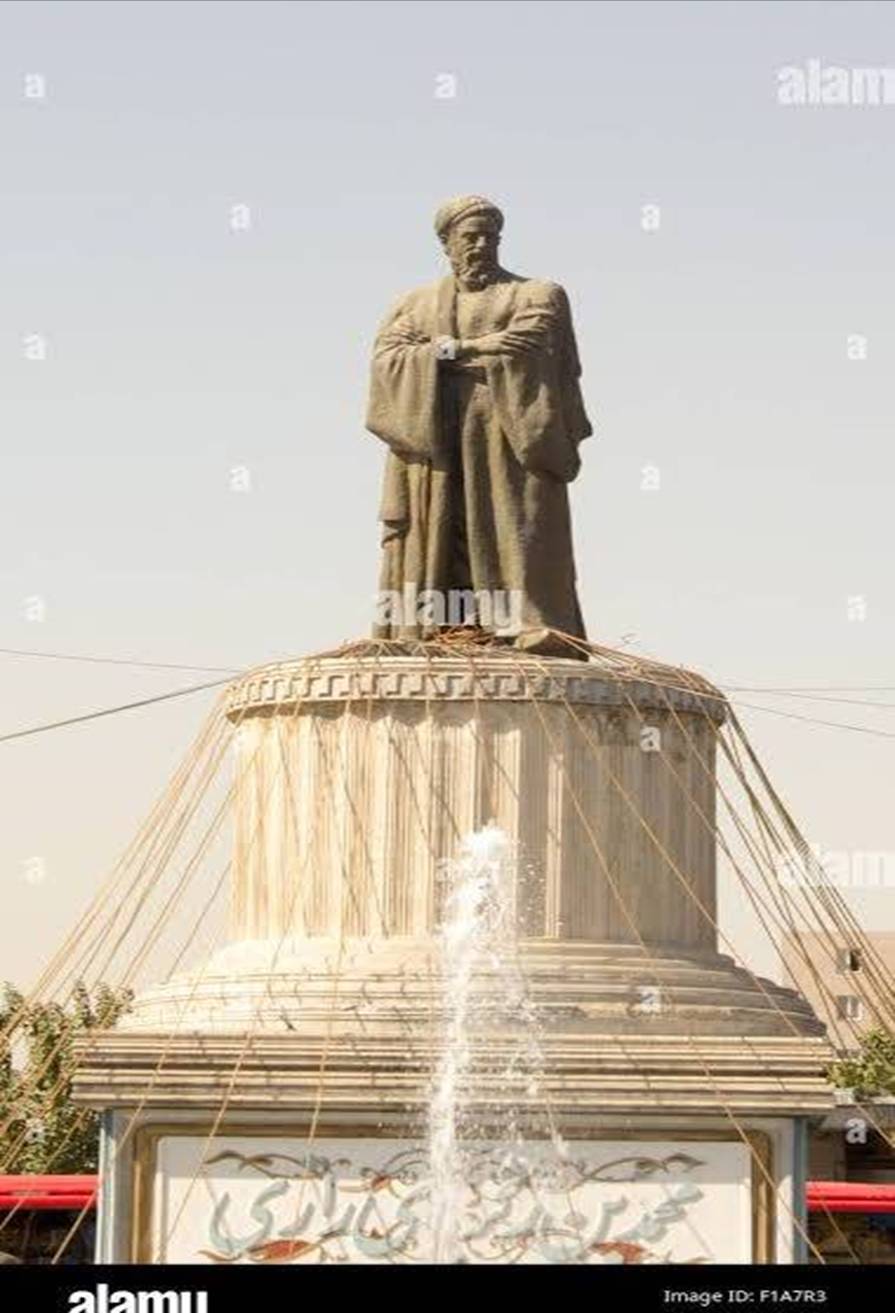
The Islamic Contributions to Medicine - Part IV: Superstar Al-Razi
By Abdul-Majeed Azad
Technologist (formerly at NASA-Jet Propulsion Laboratory)
Pasadena, CA

The spread of Islam beyond the Arab peninsula witnessed steady expansion of Islamic Caliphate which was eager to educate its subjects. The Caliphs were great patrons of science and culture. They fully understood the real meaning of the famous saying of Prophet Mohammad (peace be upon him) - though according to Sheikh Naseeruddin al Al-Bani, not authentic - that in search of knowledge, one should go to lands as far as China! Its core sentiment has long served as a reinforcer to pursue knowledge and wisdom in earnest, irrespective of the distance or difficulty. This sentiment led to the birth of prominent Muslim scholars, such as, Imam Bukhari, Abu Hanifah, Shafi’i, Ahmed ibn Hanbal and Abd Allah ibn Mubarak!
It also gave rise to another cadre of scholars, who were well-versed not only in religion and jurisprudence but also in physical and natural sciences as well. They played an immense role in the advent of various physical sciences, medicine and medical research in the 9 th to 13 th CE. Long-lasting momentous strides and great advancements were made during this era of Islamic expansion. This formed the basis of Western awakening (famously known as European Renaissance), in areas of physical, natural and medical sciences in which Muslims had left indelible footprints several centuries earlier.
Personalities such as Ibn Rushd, Al-Razi, Ibn Sina and Ibn Al-Nafis, were some of the true stalwarts of discoveries of illnesses and their treatments in their times. Thanks to their invaluable contributions, modern medical field benefitted immensely and progressed in the Western world that we witness today.
Al-Rāzī : Abū Bakr al-Rāzī (known in the West as Rhazes), was a prominent Persian alchemist, physician and philosopher. He was born in Rayy, near what is today’s Tehran around 865 AD. His early life involved doing many minor odd jobs; he worked as a jeweler, money changer and even a musician (flute player). Later, his interest drew him to alchemy. However, by his middle age, he had to abandon alchemy because such experiments led to partial blindness. He sought physicians and medicines for cure, but with little success. This is believed to be the reason that led him to pursue medical sciences. His interest in medicine reportedly also arose after he visited a home for the sick in Baghdad. He was moved by the suffering of the patients there. That is when he decided to devote the rest of his life to alleviating human misery through the practice of medicine. So, he shifted his focus to philosophy and medicine.
He studied under Ali ibn Sahl Rabban al-Tabari . Al-Tabari was a great Muslim scholar, physician and psychologist of Persia by his own accord. He wrote the first encyclopedia on medicine, entitled Firdaws al-Hikmah (Paradise of Wisdom). He was the first to discover that pulmonary tuberculosis was contagious. He served in the court of Abbasid caliphs al-Mu’tasim (r. 833-842 AD) and al-Mutawakkil (r. 847-861 AD). He was fluent in Syriac and Greek both. Besides being a brilliant physician and psychologist, he was also involved in interreligious polemics. Being a convert from Christianity to Islam, he wrote two works highly critical of his former religion: al-Radd ´alā l-Nasārā (The Refutation of Christians) and Kitāb al-Dīn wa-l-Dawla (The Book of Religion and Empire). Their English translation was published as a single book, The Polemical Works of ʿAlī al-Ṭabarī, in 2016 (Brill).
Al-Razi is celebrated for his significant contributions to medicine during the Islamic Golden Age, particularly in his hometown Rayy and in Baghdad. In those days, Baghdad was the epic center of learning in the medieval Middle East with fully equipped hospitals, well-stocked libraries, and a sound tradition of research. Abbāsid caliphs, al-Manṣūr (r. 754-775 AD), Hārūn al-Rashīd (r. 786-809 AD) and Ma՚mūn al-Rashīd (r. 813-833 AD), had generously endowed institutes for the study of ancient Greek, Persian and Indian arts and sciences. Al-Razi earned the reputation of an effective and compassionate healer, which resulted in his appointment by the ՙAbbāsid caliph al-Muqtadir, as physician-in-chief of the main hospital in Baghdad in 918. To select a site for this hospital, Al-Razi had pieces of meat hung in different parts of the city. The spot where the meat rotted least and decomposed most slowly was deemed to be the area of least contamination and healthiest air and selected for the construction of the new hospital.
Al-Razi is regarded as Islam’s greatest clinician and original thinker and one of the most influential contributors to medicine of his time which is probably true even today. He wrote nearly 237 books, half of which dealt with medicine and medical topics. His treatise, The Diseases of Children, made him the father of pediatrics. He was the first to identify hay fever and its cause. His work on kidney stones is still considered one of the greatest discoveries. Al-Razi emphasized reliance on observation. He also advocated the use of experimental medicine and the beneficial use of plants for medicinal purposes as well as the production of other drugs. He asked for high professional standards from medical practitioners as well as continued education for already licensed physicians.
Al-Razi was the first to underline the value of mutual trust and consultation among skilled physicians in the treatment of patients. His first major work was a 10-part book entitled Al-Kitab al-Mansuri, named after the ruler of Rayy, Mansur Ibn Ishaq. The book has discussions on such varied subjects as: general medical theories and definitions, diet and drugs and their effect on the human body, mother, childcare, skin disease, oral hygiene, climatology and effect of environment on health. It also discussed epidemiology and toxicology.
Al-Razi authored Al-Judari wa al Hasbah, the first book ever written on smallpox and measles. By demonstrating his clinical observations, he was the first to distinguish the two diseases and provide guidelines for the treatment of both. He discovered that the path of contracting them was different, although the symptoms could be viewed as somewhat similar. Measles is lethal to a much lesser degree and is transmitted by the virus paramyxovirus . On the other hand, Variola major and Variola minor strains of viruses produce smallpox. About smallpox, he wrote: Smallpox appears when blood 'boils' and is infected, resulting in vapors being expelled. Thus, juvenile blood is being transformed into richer blood, having the color of mature wine. At this stage, smallpox shows up essentially as 'bubbles found in wine' - (blisters). Smallpox can occur at times other than during childhood. The best thing to do during this first stage is to keep away from population, otherwise it might turn into an epidemic . As we know, smallpox has killed hundreds of thousands of people around the world until a vaccine was produced in the last century.
His most celebrated work is a medical encyclopedia comprising 25 books, called Al-Kitab al-Hawi ( The Comprehensive Work). He spent a lifetime collecting material for this book. He intended it to be a summary of all the medical knowledge up to his time, enriched with his own experience and observations. In this, Al-Razi emphasized that physicians ought to pay careful attention to patients’ symptomatic history, rather than merely relying on the previous treatment. Al-Kitab al-Hawi was not only a medical encyclopedia per se. It was a collection of case studies on different people during his lifetime including himself. It is also a compilation of articles he wrote in judgment of other physicians and philosophers of his time.
Al-Razi's clinical skills are also reflected in his understanding of human nature. He discussed ethics in medicine at length, outlining how medical professionals must conduct themselves. In a series of discussions on the doctor-patient relationship, he described principles that are still taught as part of medical curricula. Doctors and patients need to establish a mutual bond of trust. He also suggested that positive comments from doctors encourage patients, make them feel better and enhance their speed of recovery. His observation that changing doctors wastes patients’ health, money and time, is equally true today!
Al- Razi is known for having discovered allergies. He was the first physician to have written on allergy and immunology. In his book, Sense of Smell, he explains seasonal rhinitis (also known as coryza) which is the irritation and inflammation of the mucous membrane inside the nose during the spring season . Rhinitis causes additional symptoms, such as sneezing, nasal itching, coughing, headache, fatigue, malaise, etc., which he realized was the same thing as allergies or hay fever. Al-Razi identified that hay fever and such were not diseases caused by their surroundings, but rather the result of the body’s immune system trying to fight off potential mutagens. He was the first physician to write a medical manual for the purpose of homecare, allowing people to treat common illnesses, such as, headaches, cold, cough, fatigue, or stomach problems, at home without consulting a physician. Al-Razi was the first to discover and use ethanol for the sterilization of medical tools used during surgeries.
He emphasized a holistic approach to treating illness: mind and body must be treated simultaneously. In Baghdad hospital, he would provide patients with music, storytelling and Qur’an recitation as means to soothe their limbs and relax their mind. He arranged for convalescent quarters for the recovering patients.
An endearing and extraordinary trait of Al-Razi was his soft-heartedness and extreme generosity towards his patients. He used to treat them without charging fees or taking any other form of compensation. Not only did he treat poor patients free of charge, but he supported them financially too with his personal funds while they convalesced at home. Above all, he insisted that the art of healing must rest on scientific footing. Because of his selfless compassion for the sick and his contributions to professional ethics, al-Razi is justifiably compared to Hippocrates. When he was not occupied with patients, he busied himself with studying and writing. As a result of the accident during his earlier days of alchemy, his eyesight began to deteriorate, developing cataracts which resulted in total loss of sight. He refused any treatment, saying his hour of death was near. He died in Rayy on October 27, 925 AD.
It would be an injustice if due credit was not given to this medical giant of Islamic era for his compassion towards the sick. His caring attitude towards his patients is most probably the impetus for the omnipresence of Spiritual Care wings in almost every hospital - big and small - everywhere in the western hemisphere! It is lamentable though that Muslims did not keep this noble practice alive amidst themselves, even though virtues of visiting and caring of the sick have been enumerated in authentic prophetic narrations. After every Fajr prayer, Rasulullah (peace be upon him) would inquire from his companions (Allah be pleased with them) if they knew anyone sick in the community. He would visit the sick and encourage his companions too to do so. In our own personal experience of almost a decade and half visiting Muslim patients and their families in various hospitals, my wife and I would see throngs of volunteers from different faiths and denominations – Christian, Jews and Chinese – filing in and out of the hospital corridors, but never ever a Muslim! Many a time we would request Imams of our local mosques to visit the sick in the hospital. They never would. Why this apathy? We always wondered.